
Interior & Exterior Painting
Painting
Read more403 Navaho Dr, Frederick, MD 21701

Finishing costs in Maryland
A doorknob hole, a ceiling stain, a whole house of popcorn — these price on completely different logic, and the trap in all of them is the minimum call-out.
Quick answer
Small drywall repairs in Maryland typically run $180 to $500 per visit, because the minimum charge — not the size of the hole — sets the price. Finishing existing board to level 4 runs $1.10 to $2.00 per square foot, a level 5 skim adds $0.50 to $1.20, and popcorn ceiling removal runs $2.00 to $4.50 per square foot including the refinish.
The numbers
Almost no contractor site in this market publishes a number, which is exactly why the question has so much search demand and so little honest supply. These are the ranges we price to in Maryland, with the reason each one is a range and not a price.
Typical in Maryland
Small patch or hole repair
$180 – $500 per visit
$180 – $500 per visit
Anything up to about the size of a dinner plate. The range is mostly minimum-charge and travel, not the patch itself — which is why five small repairs cost far less than five times one.
$40 – $120 each
The single best-value line on this page. Walk the house and make a list before you book.
$450 – $1,100
Cut back to studs, blocking added, new board let in and blended. Blending into an existing textured or aged wall is the slow part.
$550 – $1,600
Assumes the leak is already fixed. The number climbs if insulation is wet, and no honest contractor will board over a ceiling cavity that has not dried out.
$1.10 – $2.00 per square foot
Board already hung by someone else. Quality of the hanging is the variable — bad seams and proud screws add coats.
+$0.50 – $1.20 per square foot
A full skim over everything. See the section below on when this is worth it and when it is not.
$2.00 – $4.50 per square foot
Scrape, skim, sand, prime. The low end is an empty room; the high end is furnished, painted-over popcorn — which does not soften and has to come off dry.
$250 – $600
Common in Maryland houses five to ten years old as framing finishes drying out. Refastening properly rather than filling is the difference between a repair and a rerun.
$1.80 – $3.50 per square foot
The way to get flat modern walls without demolition. Two to three coats over the whole surface, so it prices closer to new finishing than to a repair.
Ranges, not quotes. Published 2026 and reviewed against work we are actually pricing in Maryland. What your job costs comes from a walkthrough — access, condition, height and finish level move a price more than square footage does. Estimates are free and in writing.
Level 4 is three coats over tape and fasteners, sanded flat, ready for primer and paint. It is the residential standard and it is what almost every quote assumes when it says nothing at all. For a bedroom with matt paint, it is genuinely the right answer and paying more is paying for something you will never see.
Level 5 adds a thin skim coat across the entire surface, so the paper and the joint compound absorb primer the same way. What that buys you is uniformity under light that runs along a wall rather than at it: a long hallway lit from one end, a big window at the end of a room, a cathedral ceiling, or any paint with a sheen above matt.
The honest test is to stand where the light will be and look down the wall, not at it. If the wall is short, the light is diffuse and the paint is flat, save the $0.50–$1.20 a foot. If you are putting eggshell on a twenty-foot wall with a window at one end, spend it — it is cheaper than repainting a wall you have decided you hate.
If the house was built before about 1980, have the popcorn tested for asbestos before anyone scrapes anything. It is an inexpensive lab test, and it is the difference between a normal renovation and a regulated abatement job. No reputable contractor will scrape a pre-1980 ceiling without that result in hand, and you should be wary of one who offers to.
Assuming it tests clear, the price hinges on one thing: whether the popcorn was ever painted. Unpainted texture softens with water and comes off in sheets. Painted texture does not absorb, has to come off dry, and takes roughly twice as long — which is the whole distance between the $2.00 and the $4.50 ends of the range.
Removal is not the end of the job. Under the texture is a ceiling that was never finished to be looked at — usually level 2 at best. It needs skimming and sanding before it can be primed, and that work is included in the range above. A quote that only covers scraping is quoting half a job.
Before you sign anything
Ask every contractor for these in writing. Quotes only compare once they do — and Maryland law requires home improvement work over $500 to be under a written contract anyway.
Want the number for your house?
Call and describe the job. You’ll get a straight answer on whether it’s something we do and roughly what it runs, before anyone books a visit.
(301) 524-1729
Priced by us, not a calculator
Drywall Finishing & Repair
What moves the number
Usually not because one contractor is expensive. Usually because they are pricing different work. These are the variables that actually move it.
This is the single most misunderstood thing about repair pricing. Driving out, protecting the floor, mixing mud, coming back twice more for second and third coats — that is most of the cost, and it is the same for a fist-sized hole as for six of them. If you have more than one thing to fix, batching them is the cheapest decision available to you.
A flat, painted, unaged wall blends easily. Orange peel, knockdown, a hand texture from 1978, or a wall that has been repainted three times all have to be matched by hand, tested, and often re-tested. Texture matching can double the labour on an otherwise trivial patch.
Drywall is the symptom often enough. A stained ceiling with a live roof leak, a cracked corner over a settling beam, popped nails on a wall that moves — repairing the surface without the cause buys you a few months. A contractor who tells you to get the plumber in first is protecting your money.
A patch is invisible until the paint goes on, and then it is visible unless the whole wall is repainted corner to corner. Spot-priming and touching up almost always flashes. Budget for painting the full wall, or accept a patch you can find in the right light.
Ceiling work in a furnished room means everything moved or wrapped, and the floor covered wall to wall. On popcorn removal this is not a small factor — it is often 30% of the job.
On the job
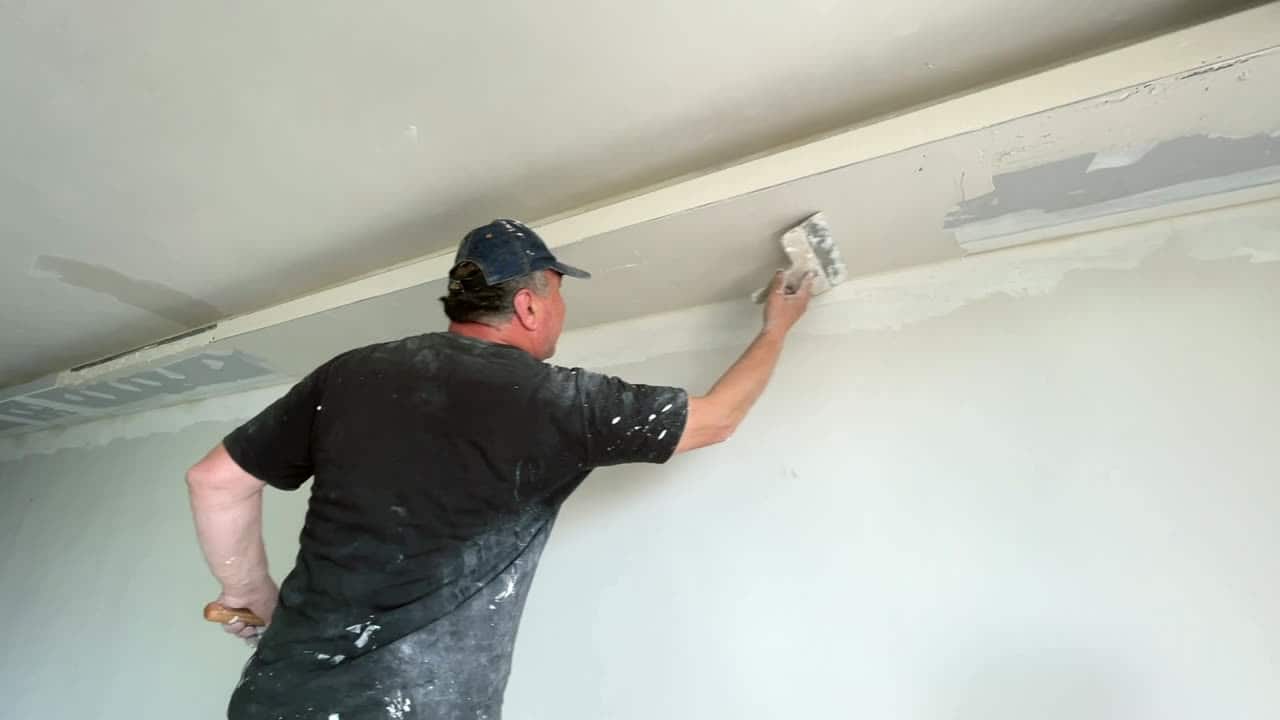
Trade photography, stage by stage — the work these numbers buy. Photos of our own recent jobs come out at the walkthrough, on the actual house.


Straight answers
Not covered here? Call and ask — you’ll get a real answer, not a “depends on the job”.
Because you are not buying the patch, you are buying three visits. Cut and back the hole, coat it, come back to coat again once it is dry, come back to sand and finish. Materials are a couple of dollars. This is exactly why batching every repair in the house into one booking is worth doing — the second and third patches are $40 to $120 each rather than another $200.
At $2.00 to $4.50 a square foot, an 1,800 square foot house with popcorn throughout typically lands between $3,600 and $8,100 — with the low end being an empty house and never-painted texture, and the high end a furnished, previously painted ceiling. Test pre-1980 ceilings for asbestos before pricing anything.
On a flat, unpainted or freshly painted wall, yes. On a textured or aged wall it depends entirely on the match, and honest expectation-setting matters more than confidence here: a well-matched patch on a knockdown wall is invisible in normal light and findable if you go looking with a raking light. Repainting the wall corner to corner is what closes the last of the gap.
To make it genuinely disappear, yes. Touch-up paint from the same can, years later, will not flash-match — the surrounding paint has aged and the new patch absorbs differently. Corner-to-corner on the affected wall is the standard advice, and it is why we quote patching and painting as two separate lines rather than burying one in the other.
Hanging is teachable in an afternoon. Finishing is not — it is the trade, and the tell is always the same: ridges at the edge of the taped joint that you cannot see until the wall is painted and the light moves across it. If you want to save money on drywall, save it on the hanging or by batching the work, not on the finish.
While the crew is there

Talk to the people doing the work
Tell us what needs doing. We’ll walk it with you, sequence every trade it touches, put the price in writing, and leave you to decide.
Get a quote
Two short steps. No obligation, no pressure — just a clear number and a straight answer about what the job involves.


Tick as many as you like. Most jobs are two or three of them at once, and I sort out the detail when I come and look. Nobody gets turned away for choosing the wrong box.


