
Interior & Exterior Painting
Painting
Read more403 Navaho Dr, Frederick, MD 21701

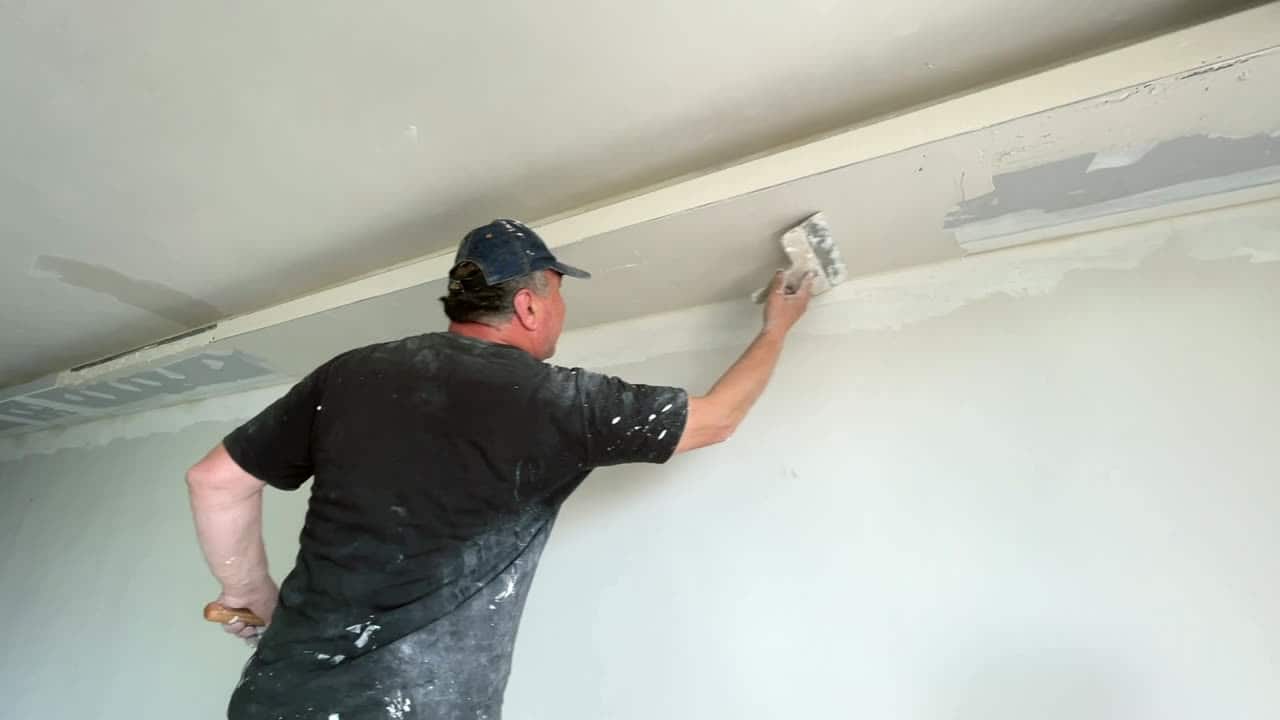
Finishing in Frederick & Central MD
Drywall finishing and repair across Frederick and Central Maryland — level 4 and level 5 finishes, invisible patch repairs, texture matching and popcorn ceiling removal, sanded flat and checked under a raking light before we call it done.
Quick answer
Level 4 finishes the joints, screws and corners and leaves the paper face of the board exposed between them. Level 5 adds a thin skim coat over the entire surface, so the whole wall has one uniform texture and porosity. Level 4 is right for most walls with a matte paint. Level 5 is worth it for gloss or semi-gloss paint, dark colours, and any wall that catches strong raking light — those are the conditions that make level 4 joints visible.
The work
Finishing is where a drywall job is won or lost, and it is almost entirely about patience. Three coats, each one given the time it actually needs to dry, each one wider than the last, then sanded flat and inspected under a light held at the wall rather than pointed at it.
It is also the stage most often rushed, which is why so many walls look fine on handover day and show every joint the first time low winter sun comes through the window.
Maryland finishing and repair ranges. Level 5 costs more because it is a full skim of the entire surface, not just the joints.
Ranges, not quotes. Real numbers come from a walkthrough — access, condition, height and finish level move a price more than square footage does. Estimates are free and in writing.
Get your numberFull finishing cost guide for MarylandPrefer to just talk?
Call and describe the job. You’ll get a straight answer on whether it’s something we do and roughly what it runs.
(301) 524-1729
Self-performed
Drywall Finishing & Repair
What’s included
Written into the estimate, not assumed. If something on your job is not on this list, it gets priced and named before anyone starts.
Three coats built up in sequence, each feathered wider than the last, each given real drying time rather than being forced.
Level 4 for standard paint and texture. Level 5 — a full skim over the whole surface — where gloss paint or heavy raking light will show every seam.
Knockdown, orange peel, skip trowel and hand textures matched to the existing surface so a repair does not read as a patch.
Scraped, skimmed and re-finished flat. Pre-1980 ceilings get tested for asbestos before anything is disturbed — no exceptions.
Cracks, holes, nail pops, corner bead damage and water-damaged board cut back to sound material and rebuilt, not just filled.
Vacuum-assisted sanding and sealed openings, because sanding dust travels further through a house than anything else on a job site.
On the job
What the trade looks like at each stage. Photos of our own recent jobs come out at the walkthrough, on the actual house.


Straight answers
Not covered here? Call and ask — you’ll get a real answer, not a “depends on the job”.
Usually, yes. Knockdown, orange peel and skip trowel are all matchable, and we will test on a scrap board and get you to look at it before it goes on the wall. Hand-applied textures from decades ago are the hardest, and occasionally the honest answer is that re-texturing the whole wall or ceiling will look better than a matched patch.
Yes — scraped off, skimmed and finished flat. If the house was built before about 1980, the ceiling should be tested for asbestos before anything disturbs it. We will not scrape an untested ceiling of that age.
Find and stop the source first — patching around an active leak is money thrown away. Then the affected board comes out back to sound material and dry framing, the cavity is checked and dried, and new board goes in, gets finished and gets texture-matched.
Once the final coat is sanded and the dust is off, the surface should be primed the same day or next. We hand over paint-ready, and if we are doing your painting as well, that transition is seamless.
While the crew is there

Talk to the people doing the work
Tell us what needs doing. We’ll walk it with you, sequence every trade it touches, put the price in writing, and leave you to decide.
Get a quote
Two short steps. No obligation, no pressure — just a clear number and a straight answer about what the job involves.


Tick as many as you like. Most jobs are two or three of them at once, and I sort out the detail when I come and look. Nobody gets turned away for choosing the wrong box.


