
Non-Structural Wood Framing
Wood Framing
Read more403 Navaho Dr, Frederick, MD 21701

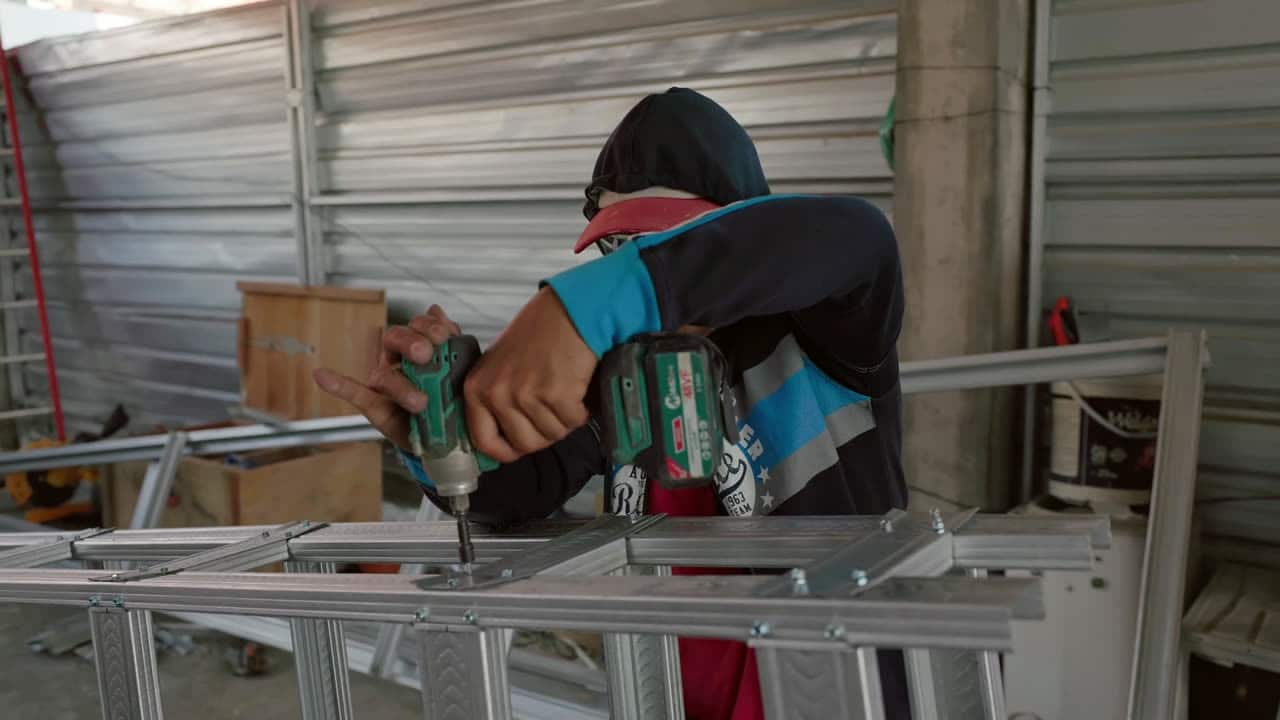
Metal Framing in Frederick & Central MD
Light-gauge metal stud framing across Frederick and Central Maryland — basements, partitions and interior build-outs framed in steel where moisture, straightness or fire rating make wood the wrong choice.
Quick answer
Below grade, in any room with a moisture history, on long walls where flatness matters, and where a fire-rated assembly is specified. Steel is dimensionally stable — it will not crown or twist after the drywall is on, which is the most common cause of a wavy finished wall.
The work
Steel studs arrive straight and stay straight. They do not crown, twist or shrink as they dry, which is why a metal-framed wall reads flatter under drywall than a wood-framed one — the difference shows most on long walls and in raking light.
They also do not absorb water, rot or give mould anything to eat. In a Maryland basement, that single property is usually the whole argument.
Light-gauge steel partition framing in Maryland, labour and materials. Steel runs close to wood on material and slightly faster on labour.
Ranges, not quotes. Real numbers come from a walkthrough — access, condition, height and finish level move a price more than square footage does. Estimates are free and in writing.
Get your numberFull metal framing cost guide for MarylandPrefer to just talk?
Call and describe the job. You’ll get a straight answer on whether it’s something we do and roughly what it runs.
(301) 524-1729
Self-performed
Metal Stud Framing
What’s included
Written into the estimate, not assumed. If something on your job is not on this list, it gets priced and named before anyone starts.
Floor and ceiling track fastened to line, studs set on consistent centers and screwed off — no crowning, no picking through a pile for a straight one.
The default for finished basements: no organic material in the wall cavity to hold water or feed mould if the room ever takes on moisture.
Hat channel and furring over block and poured walls, shimmed flat so the finished surface is a plane rather than a map of the foundation.
Factory knockouts grommeted before wire goes through, so cable is not resting on a cut steel edge.
Steel does not hold a heavy fixing on its own — we set wood or strap backing at cabinets, vanities, grab bars and TV mounts.
On the job
What the trade looks like at each stage. Photos of our own recent jobs come out at the walkthrough, on the actual house.


Straight answers
Not covered here? Call and ask — you’ll get a real answer, not a “depends on the job”.
Material cost is close, and moves with both lumber and steel pricing. Labour is often slightly lower because the studs are uniform and there is no culling. The honest answer is that on most residential partitions the two land within a few percent of each other.
Yes, but the backing has to be planned before the drywall goes on. We set wood blocking or steel strap at any location you tell us about — vanities, cabinets, grab bars, wall-mounted TVs. Retrofitting backing after the wall is closed means opening it again.
Untreated, a steel-stud wall can transmit slightly more impact noise. It is also easier to fix: the flex in a steel stud means resilient channel and insulation work well, and a properly insulated steel partition typically outperforms a bare wood one.
We do both, and we will tell you which one your job actually wants rather than defaulting to whichever we prefer to work with.
While the crew is there

Talk to the people doing the work
Tell us what needs doing. We’ll walk it with you, sequence every trade it touches, put the price in writing, and leave you to decide.
Get a quote
Two short steps. No obligation, no pressure — just a clear number and a straight answer about what the job involves.


Tick as many as you like. Most jobs are two or three of them at once, and I sort out the detail when I come and look. Nobody gets turned away for choosing the wrong box.


