
Non-Structural Wood Framing
Wood Framing
Read more403 Navaho Dr, Frederick, MD 21701

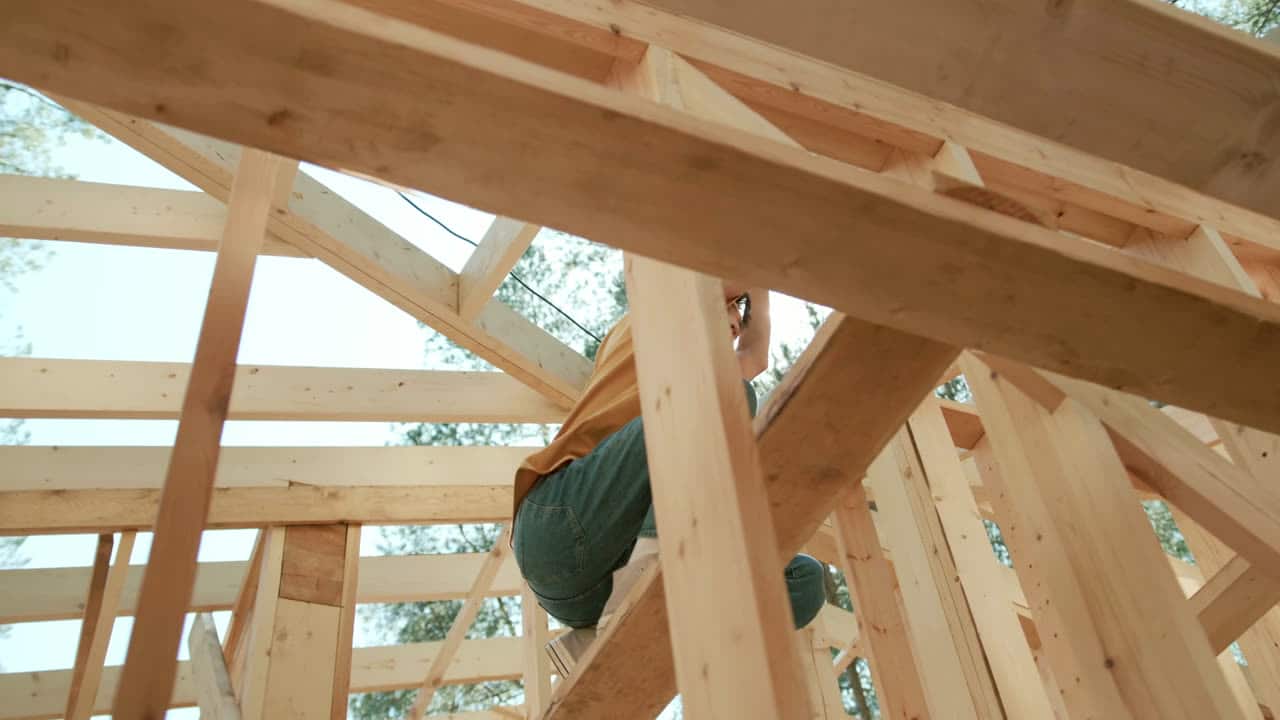
Metal Framing costs in Maryland
Steel prices close enough to wood that the decision is rarely about money. Here are the real numbers, and the four situations where steel is the answer regardless.
Quick answer
Metal stud framing in Maryland typically runs $9 to $20 per linear foot for a partition wall, or $4 to $8 per square foot for a basement build-out — roughly 10 to 15 percent above comparable wood framing. Furring over masonry runs $3 to $6 per square foot. The premium buys dimensional stability, no rot and no fuel for mould, which is why it is common on basement perimeters and in wet areas.
The numbers
Almost no contractor site in this market publishes a number, which is exactly why the question has so much search demand and so little honest supply. These are the ranges we price to in Maryland, with the reason each one is a range and not a price.
Typical in Maryland
Metal stud partition wall
$9 – $20 / linear ft
$9 – $20 per linear foot
Non-load-bearing interior wall, track top and bottom, standard 25-gauge studs at 16 inches. Heavier gauge for a wall carrying cabinets or a wall-hung fixture pushes the top of the range.
$4 – $8 per square foot
On finished floor area, same measurement basis as the wood framing guide so the two compare directly.
$3 – $6 per square foot
Hat channel or furring studs against block or poured concrete. The cheapest way to get a flat, fixable surface on a foundation wall.
$16 – $32 per linear foot
Slightly above wood. Steel comes dead straight out of the bundle, which on a long soffit run is worth the difference by itself.
+$2 – $5 per linear foot
Needed where the wall carries real load — wall-hung vanities, grab bars, heavy cabinetry, a large TV. Specify it at framing; you cannot add it later.
$45 – $130 per location
The one thing steel makes you plan for. Every future grab bar, TV mount, cabinet run and handrail needs backing installed now.
$14 – $28 per square foot
Fire-rated assemblies around a stair, a chase or a shared wall. Priced by the assembly, not the stud, because the board is most of it.
$130 – $300 per opening
Slightly above wood — jamb studs generally get boxed or reinforced so the door has something solid to hang on.
Ranges, not quotes. Published 2026 and reviewed against work we are actually pricing in Maryland. What your job costs comes from a walkthrough — access, condition, height and finish level move a price more than square footage does. Estimates are free and in writing.
Material for material, steel studs and wood studs have traded places repeatedly over the last few years, and quoting a fixed percentage gap would be dishonest. What has been consistent is the installed difference: metal framing generally comes in around 10 to 15 percent above comparable wood on a residential partition, and the gap narrows on long, simple runs where steel is faster.
What does not vary is dimensional stability. Steel comes straight and stays straight. Wood arrives with a crown, sometimes a twist, and continues to move as it dries — which is where nail pops and cracked corners come from in year two of a new Maryland house. On a long wall or a high wall, the flat surface you get out of steel is worth real money at the drywall stage.
Where wood keeps its advantage is attachment. Anything heavy, anything you might change your mind about later, anything a trim carpenter has to scribe to — wood is simply easier. The practical answer in a lot of Maryland basements is both: steel on the perimeter and in the wet areas, wood for interior partitions and anything carrying weight.
Basement perimeters. Our clay soils hold moisture against foundation walls and Maryland freeze-thaw cycles work on them all winter. Steel does not rot, does not warp when it gets damp, and gives mould nothing organic to eat. On the wall closest to the concrete, that matters more than a few hundred dollars.
Bathrooms and laundry rooms. Same logic, higher stakes — these walls will get wet at some point in their life, whether from a leak or just from years of humidity.
Long, tall or highly visible walls. A twenty-foot wall or a two-storey stairwell wall in wood will telegraph every crowned stud once the light crosses it. Steel is the cheapest way to get that wall flat.
Rated and commercial-standard assemblies. If the assembly needs a fire rating, steel is usually what the tested assembly specifies, and substituting is not a judgement call.
Before you sign anything
Ask every contractor for these in writing. Quotes only compare once they do — and Maryland law requires home improvement work over $500 to be under a written contract anyway.
Want the number for your house?
Call and describe the job. You’ll get a straight answer on whether it’s something we do and roughly what it runs, before anyone books a visit.
(301) 524-1729
Priced by us, not a calculator
Metal Stud Framing
What moves the number
Usually not because one contractor is expensive. Usually because they are pricing different work. These are the variables that actually move it.
Twenty-five gauge is fine for a partition that only has to hold drywall. Anything the wall has to carry — a floating vanity, a grab bar, a 75-inch TV, upper cabinets — needs 20 or 18 gauge, or dedicated backing. This is a specification decision made before the wall closes, and retrofitting it means opening the wall.
Sixteen inches on centre is standard. Twenty-four is permitted on some non-load-bearing partitions and saves material, but it shows: drywall between studs at 24 inches has visible give if you press on it, and it telegraphs under a level-5 finish. We default to 16 for anything a person will touch.
With wood you can find a stud and get away with it. With steel you cannot — screws into 25-gauge steel will not hold a shelf. Everything that will ever hang on that wall has to be backed at framing. It is not expensive per location; it is expensive to forget.
Rated walls around stairs, mechanical rooms and shared walls are priced as an assembly — specific stud, specific board, specific fastening, no substitutions. That is a different number from a partition wall and should be a separate line.
Worth saying plainly: a crew that frames metal every week is faster than a wood carpenter working in steel, and the price reflects it. If you are getting metal quotes far above wood, it is often crew experience rather than material.
On the job
Trade photography, stage by stage — the work these numbers buy. Photos of our own recent jobs come out at the walkthrough, on the actual house.


Straight answers
Not covered here? Call and ask — you’ll get a real answer, not a “depends on the job”.
Installed, generally about 10 to 15 percent more on a residential partition. Material prices for both have moved a lot in recent years so the gap is not fixed, and on long simple runs steel can close it entirely because it goes up faster. The decision is usually made on moisture and straightness rather than on the price difference.
Yes, but only if backing was installed at framing. Screws into 25-gauge steel will not carry weight. Plywood backing plates or heavier-gauge studs at those locations cost $45 to $130 each and take two minutes at framing — and require opening the wall afterwards. Give your framer a list of everything that will ever hang on those walls, including the ones you are only half considering.
On the perimeter walls, in our view yes. Maryland basements are a moisture environment whether or not they have ever had water in them, and steel gives mould nothing to feed on and does not warp when it gets damp. For interior partitions where you want to hang things, wood is often the more practical choice. Mixing the two in one basement is normal, not a compromise.
Slightly different rather than worse. Steel studs are more flexible than wood, which actually reduces sound transmission through the wall a little. What people notice is the wall feeling less solid to the knuckle — that is a stud-spacing and board-thickness question, and 16-inch spacing with 5/8 board addresses it.
Structural steel framing exists and is engineered, but it is a different product and a different conversation from the non-load-bearing partition work priced on this page. Anything carrying structure needs an engineer, and the ranges here do not apply.
While the crew is there

Talk to the people doing the work
Tell us what needs doing. We’ll walk it with you, sequence every trade it touches, put the price in writing, and leave you to decide.
Get a quote
Two short steps. No obligation, no pressure — just a clear number and a straight answer about what the job involves.


Tick as many as you like. Most jobs are two or three of them at once, and I sort out the detail when I come and look. Nobody gets turned away for choosing the wrong box.


